ADC12 for electronics and thermal management
Device housings, LED driver enclosures, 5G base station casings and cast heat sinks. Thin-wall capability down to 1.2 mm, certified to EN and JIS on a single material test certificate.
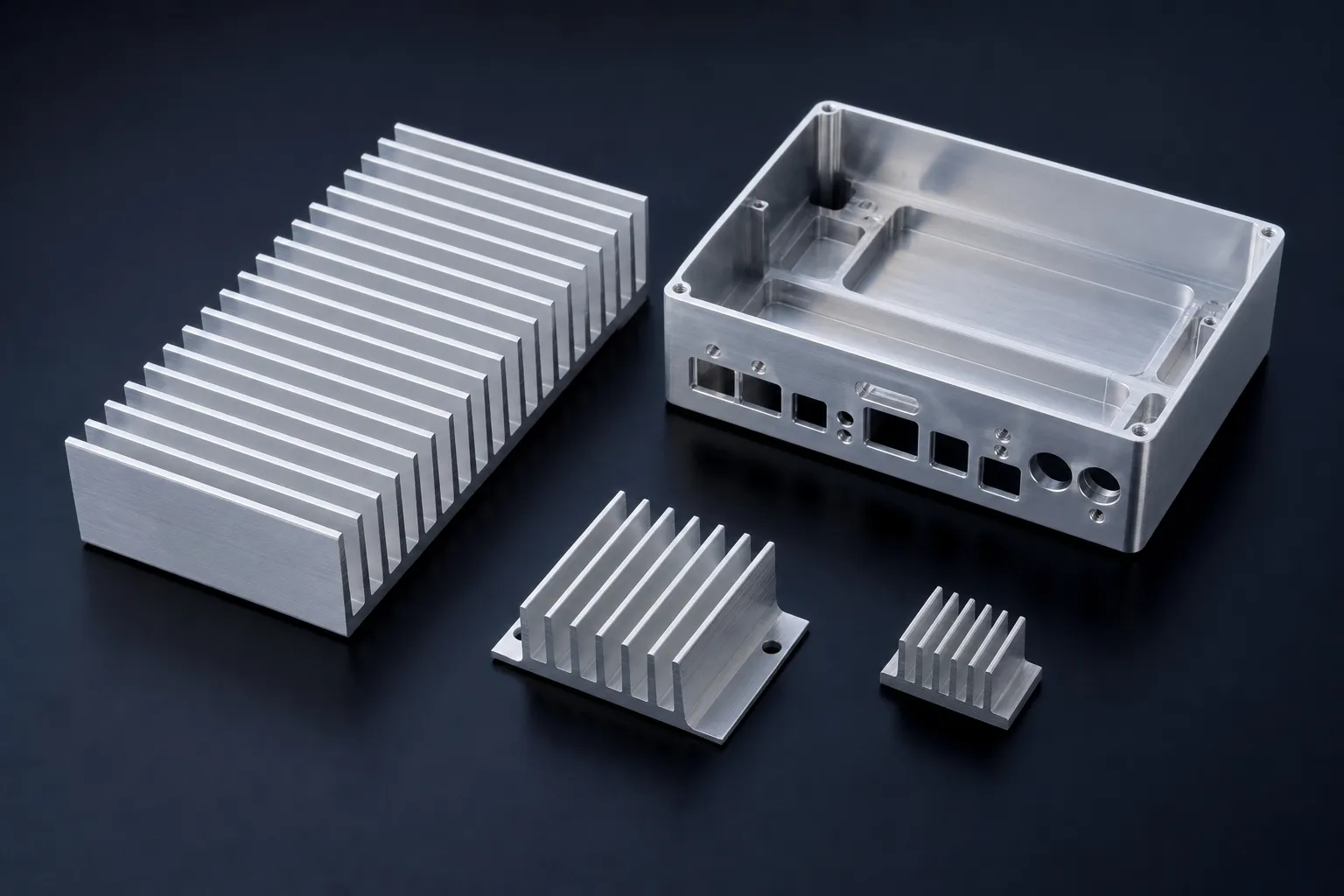
Where ADC12 belongs, and where it does not
Electronics casting splits along one question: is the part doing electrical and mechanical work, or is it moving heat? ADC12 is excellent at the first and adequate at the second. Being straight about that saves you a failed prototype round.
| Component | Alloy | Why |
|---|---|---|
| Device and instrument housings | ADC12 | Thin walls, cast-in bosses and gasket grooves in a single shot |
| 5G and RF base station enclosures | ADC12 | Continuous conductive shell for EMI shielding, no seams to leak |
| LED driver and luminaire housings | ADC12 | Combines housing, mounting and fin geometry in one casting |
| Commercial cast heat sinks | ADC12 | Fin density that extrusion cannot reach, offsets lower conductivity |
| Thermally critical heat sinks | AL-Si or extruded 6000-series | Needs conductivity above what a 3% copper alloy can deliver |
On thermal conductivity: ADC12 conducts at roughly 90 to 100 W/m·K against pure aluminium at about 220. Silicon and copper both impede conduction. Where the geometry does the work, through fin count and surface area that only die casting makes economic, ADC12 usually wins on thermal performance per euro. Where every watt counts, it does not.
Frequently asked questions
Is ADC12 suitable for heat sinks?
For most commercial heat sinks, yes. ADC12 conducts heat at roughly 90 to 100 W/m·K, well below pure aluminium at around 220 W/m·K, because silicon and copper both impede conduction. Where the casting geometry does the work, through fin count, fin density and surface area that only die casting can produce economically, ADC12 usually outperforms a simpler extruded profile in a cheaper alloy. For thermally critical applications where every watt matters, an extruded 6000-series profile or a lower-alloy AL-Si casting is the better choice.
Does ADC12 provide EMI shielding?
Yes. A die-cast ADC12 enclosure gives a continuous conductive housing with no seams to leak through, which is why it is the default for RF and 5G equipment enclosures. Cast-in bosses, gasket grooves and mounting features can be produced in the same shot, removing assembly operations that would otherwise compromise the shield.
How thin a wall can you cast in ADC12?
ADC12 fills reliably down to about 1.2 to 1.5 mm on small to medium electronics housings, and 2 to 2.5 mm across larger enclosures where flow paths are longer. The 9.6 to 12% silicon content is what makes this possible, giving the alloy the fluidity to fill a thin section before it freezes.
Do you supply CBAM emissions data for electronics enclosures?
Yes. Every shipment carries verified embedded-emissions data covering direct and indirect emissions per tonne of finished ingot, calculated to the EU CBAM methodology and verified by an accredited third party. This documentation supports your CBAM declaration directly. Read the full CBAM guide.
Send us the enclosure, we will tell you the alloy
Give us the part, the annual volume and the delivery port. Noel Murphy replies within 24 hours with pricing, lead time and CBAM documentation.