AL-Si Aluminium-Silicon Alloy Ingot
Precision-formulated aluminium-silicon alloys with tightly controlled Si ratios for superior fluidity, dimensional accuracy and surface finish — engineered for automotive engine components, EV battery housings, turbocharger housings, and high-performance precision die-casting.
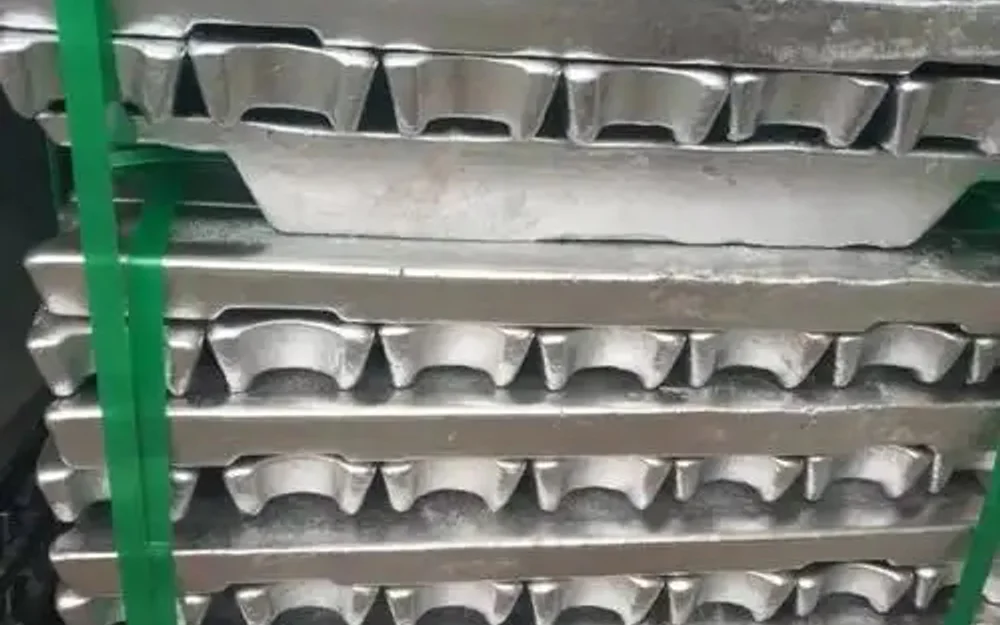
Overview
Aluminium-silicon alloys are the backbone of the global casting industry. Silicon additions of 5–13% give exceptional fluidity — essential for filling complex moulds at high speed — combined with low shrinkage, good corrosion resistance and weldability. Tech Aluminum's AL-Si product line covers the premium grades of the European EN 1706 AC-4xxxx series, with controlled-impurity chemistries engineered for the most demanding automotive, EV and aerospace applications.
Unlike high-volume ADC12-type alloys (which contain 1.5–3.5% copper), our AL-Si premium grades restrict copper to ≤ 0.05% — giving them superior corrosion resistance, weldability and ductility. These are the alloys specified for safety-critical chassis castings, EV battery housings, turbocharger components and any application requiring heat treatment, anodising or laser welding in downstream processing.
Available grades
We supply the four most widely specified AL-Si grades in European automotive and general die-casting. Composition tables follow in the Specifications section.
Specifications
General properties (all grades)
| Product family | EN 1706 AC-4xxxx series |
| Aluminium base | ≥ 99.7% primary feedstock |
| Silicon range | 7–13% (grade-dependent) |
| Standard ingot weight | 20 kg ± 0.5 kg |
| Bundle weight | 500–1,000 kg (configurable) |
| Density | ≈ 2.65–2.70 g/cm³ (grade-dependent) |
| Melting range | 557–615 °C |
| Surface condition | Clean, free from slag and dross |
| Marking | Heat number, alloy grade and weight stamped per ingot |
Chemical composition — AlSi7Mg (EN AC-42000)
| Element | Min % | Max % |
|---|---|---|
| Silicon (Si) | 6.5 | 7.5 |
| Magnesium (Mg) | 0.25 | 0.45 |
| Iron (Fe) | — | 0.19 |
| Copper (Cu) | — | 0.05 |
| Manganese (Mn) | — | 0.10 |
| Zinc (Zn) | — | 0.07 |
| Titanium (Ti) | — | 0.25 |
| Aluminium (Al) | Balance | |
Chemical composition — AlSi10MnMg (EN AC-43500)
| Element | Min % | Max % |
|---|---|---|
| Silicon (Si) | 9.5 | 11.5 |
| Manganese (Mn) | 0.5 | 0.8 |
| Magnesium (Mg) | 0.1 | 0.5 |
| Iron (Fe) | — | 0.15 |
| Copper (Cu) | — | 0.03 |
| Zinc (Zn) | — | 0.07 |
| Titanium (Ti) | — | 0.15 |
| Aluminium (Al) | Balance | |
Mechanical properties (typical, T6 heat-treated)
| Property | AlSi7Mg-T6 | AlSi10MnMg-T7 |
|---|---|---|
| Tensile strength (Rm) | 290–320 MPa | 240–280 MPa |
| 0.2% proof stress (Rp0.2) | 240–260 MPa | 120–160 MPa |
| Elongation (A) | 3–6 % | 7–12 % |
| Brinell hardness (HB) | 90–110 | 70–95 |
Casting characteristics
- Fluidity: Excellent — near-eutectic grades (AlSi12) offer the best fluidity in the entire aluminium family
- Shrinkage: Very low — superior dimensional stability for precision components
- Hot-cracking resistance: Excellent — tolerant of complex moulds and rapid cooling
- Pressure tightness: Excellent — suitable for pressure-rated housings
- Weldability: Good — low-Cu chemistry enables laser welding for assembly
- Anodising response: Good — uniform finish for cosmetic and protective applications
- Heat treatment: Most grades responsive to T6 (solution + age) and T7 (over-aged) tempers
Standards & equivalents
The EN 1706 AC-4xxxx series is the European reference for cast aluminium-silicon alloys. Cross-references to other major standards:
| Region | Standard | Designation |
|---|---|---|
| Europe (EU) | EN 1706 | EN AC-42000 / AC-43500 / AC-44200 / AC-45500 |
| Germany | DIN EN 1706 | AlSi7Mg / AlSi10MnMg / AlSi12 / AlSi9Cu1Mg |
| USA | ANSI / AA | A356 / A360 / A413 / A319 (closest equivalents) |
| Japan | JIS H 5302 | AC4C / AC4CH / ADC1 / AC2A (closest equivalents) |
| China | GB/T 1173 | ZL101 / ZL104 / ZL102 / ZL107 |
| ISO | ISO 3522 | Al-Si7Mg / Al-Si10Mg(Mn) / Al-Si12(Fe) / Al-Si9Cu1Mg |
For automotive Tier-1 programmes with proprietary specifications (e.g. tighter Fe limits than standard EN 1706, controlled rare-earth additions, Sr-modification for fine eutectic structure), we routinely supply heats tailored to your TS exactly. Send us your specification sheet on enquiry and we'll quote against it directly.
Applications
AL-Si premium alloys are the alloys of choice for the most demanding casting applications across European industry:
See our Automotive industry page for EV-specific guidance.
Quality & testing
AL-Si premium grades demand the tightest composition control of any aluminium product we supply. Every heat is verified by optical emission spectrometry against the specified EN 1706 grade limits before casting. For automotive Tier-1 customers, additional process documentation is supplied as standard.
- Full spectro analysis (OES) on every heat — composition verified against EN AC-4xxxx limits and customer specifications
- Material Test Certificate (MTC) per EN 10204 3.1 with every shipment
- SGS or Bureau Veritas inspection available on buyer request
- Heat traceability — every ingot stamped, full traceability to raw materials
- Tensile test bars available on request for first-article and PPAP submission
- Microstructure analysis available for grain-refinement and modification verification
- Hydrogen content control — degassing during melt processing, available on request with hydrogen-content reporting
View our full Quality & Compliance page.
CBAM compliance documentation
Every AL-Si shipment from Tech Aluminum includes the verified emissions documentation your CBAM declaration requires:
- Embedded emissions per tonne — direct (Scope 1) and indirect (Scope 2) emissions
- Smelter electricity mix documentation
- Third-party verification by an accredited body, formatted to EU CBAM methodology
- Quarterly carbon-footprint reports for ongoing buyers
European EV manufacturers are under intensifying pressure to reduce embedded carbon in battery housings and structural castings — both from CBAM and from internal sustainability targets. Tech Aluminum's renewable-energy base typically results in significantly lower embedded emissions than standard grid-powered aluminium, helping you meet both compliance and brand sustainability goals. Read our full CBAM guide →
Packaging & shipping
AL-Si ingots are bundled with high-tensile steel straps and palletised for container loading. Bundle weights configurable between 500 kg and 1,000 kg.
- 20ft container: ~20–22 tonnes net
- 40ft container: ~24–26 tonnes net
- European ports served: Rotterdam, Hamburg, Antwerp, Genoa, Barcelona, Felixstowe
- Incoterms offered: FOB, CIF, CFR, Ex-Works
- Lead time: 10–30 days from order confirmation
Full export documentation included. See our Logistics & Shipping page.
Frequently asked questions
What is an Al-Si aluminium-silicon alloy?
Aluminium-silicon (Al-Si) alloys are the most important family of casting alloys. Silicon additions of 5–13% give exceptional fluidity (essential for filling complex moulds), low shrinkage, good corrosion resistance and weldability. The European EN 1706 standard covers the full Al-Si family under the EN AC-4xxxx series, including hypoeutectic alloys like AlSi7Mg (EN AC-42000) for chassis castings, AlSi10MnMg (EN AC-43500) for structural die-cast parts, and near-eutectic AlSi12 (EN AC-44200) for pistons and complex thin-wall castings.
Which Al-Si alloy grade do you supply?
Tech Aluminum supplies the full Al-Si family under EN 1706: AlSi7Mg (EN AC-42000) for premium chassis and suspension castings, AlSi10MnMg (EN AC-43500) for modern structural die-casting, AlSi12(Fe) (EN AC-44200) for thin-wall and piston applications, and AlSi9Cu1Mg (EN AC-45500) for high-strength automotive applications. Specify your alloy designation on enquiry or describe the application and we will recommend the appropriate grade.
What is the difference between Al-Si alloys and ADC12?
ADC12 (EN AC-46000) contains both silicon (9.6–12%) AND copper (1.5–3.5%), making it part of the Al-Si-Cu family — a high-volume, lower-cost die-casting alloy. Our AL-Si premium grades typically restrict copper to ≤ 0.05% which gives them better corrosion resistance, weldability and ductility — important for safety-critical chassis parts, electric vehicle battery housings, and components that need surface treatment or welding. ADC12 = high volume mainstream; AL-Si premium grades = high-performance applications.
What is the minimum order quantity for Al-Si ingots?
Our standard minimum order quantity is 20 tonnes (one 20ft container load). Sample quantities of 5–10 tonnes are available for first-time European buyers conducting qualification testing. For automotive Tier-1 specifications requiring tight composition windows, we recommend a first sample shipment for spectro verification before commercial production.
Are your Al-Si alloys suitable for EV battery housings?
Yes. AlSi10MnMg (EN AC-43500) is the dominant alloy for high-pressure die-cast EV battery trays and housings — used by virtually every European EV programme. It combines high castability, good mechanical properties in the as-cast or T7 heat-treated condition, and excellent weldability for the assembly process. We supply this grade routinely with the tight Fe, Cu and Zn limits required by automotive Tier-1 specifications.
Can you supply alloys to custom specifications?
Yes — this is one of our specialities. For automotive Tier-1 programmes with proprietary technical specifications (tighter limits than standard EN 1706, controlled rare-earth additions, Sr or Na modification for fine eutectic structure), we tailor heats exactly to your TS. Send your specification sheet on enquiry and we will quote against it directly. Typical first-sample qualification timeline is 6–8 weeks from spec receipt.
Let's discuss your AL-Si requirements
Send us the alloy grade (or describe the application), tonnage, delivery port and any specification documents — we respond within 24 hours.
Or contact Noel directly: WhatsApp · noel@techaluminum.com