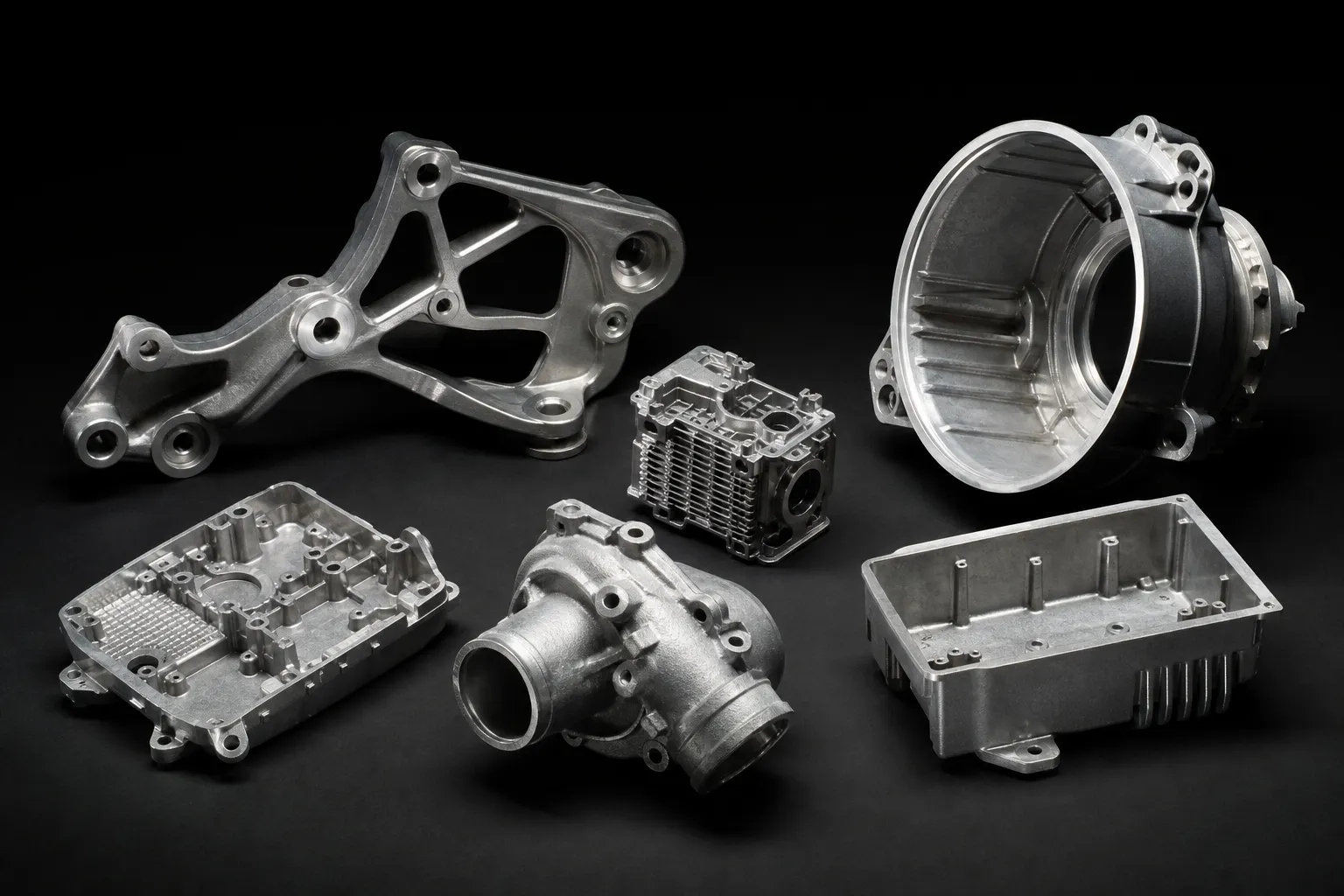
In high-pressure die-casting (HPDC), selecting the optimal aluminium alloy represents a complex trade-off between mechanical properties (yield strength, ductility), physical performance (fluidity, shrink behavior), and overall B2B processing costs. While general-purpose alloys satisfy standard brackets, next-generation electric vehicles (EV) and lightweight electronics demand highly specialized structural chemistries.
The Mainstream Benchmark: The ADC12 / AlSi9Cu3 Family
The ADC12 / EN AC-46000 family is the workhorse of global die-casting, specified for nearly 70% of automotive engine brackets, oil pans, electronic housings, and tool covers.
Why it is popular: The copper content (2.0% - 4.0%) provides excellent tensile strength, high hardness, and ease of machining. The high silicon content (approx. 10%) guarantees excellent fluidity and low shrinkage, allowing complex parts to fill quickly under high pressure.
The limits: The presence of copper limits the alloy’s corrosion resistance and reduces ductility, making it unsuitable for structural safety-critical components that must absorb impact energy without cracking.
Structural Safety Nodes: The AlSi7Mg / AlSi10Mg Family
With the rapid adoption of electric vehicles, structural castings such as shock-absorber towers, longitudinal chassis members, and EV battery envelopes are now cast in low-iron, copper-free alloys like AlSi7Mg (EN AC-42000) or AlSi10MnMg (EN AC-43500).
- High Ductility: Because these alloys are copper-free, they can undergo post-casting solution heat treatments (T6) to achieve outstanding elongation values (>10% before failure). This allows structural parts to bend and deform in a collision, absorbing crash energy to protect vehicle occupants.
- Excellent Welding capacity: Sourcing low-iron primary alloy ingots prevents brittle phases, allowing structural nodes to be easily welded or riveted directly into the steel-aluminium hybrid car frame.
Thin-Walled Precision: The AlSi12 Family
For delicate electronic housings, telecom base-station brackets, and high-density heatsinks, engineers specify AlSi12 (EN AC-44200). With silicon levels sitting at the eutectic point (12.0%), this alloy offers the absolute highest fluidity among all casting metals, allowing the casting of complex radiator fins with wall thicknesses down to 1.0 mm.
"By producing low-gas, highly refined AlSi7Mg and AlSi12 alloy ingots under strict laboratory supervision in Egypt, Tech Aluminum provides European foundries with the physical consistency needed to cast flawless, thin-walled structural battery frames."
Summary: Alloy Selection Matrix
Selecting the ideal casting feedstock depends heavily on your component's structural role:
- General Mechanical Parts: Specify ADC12 / EN AC-46000 for maximum strength and ease of machining.
- Chassis & Crash Structures: Specify AlSi7Mg or AlSi10MnMg for ductility, weldability, and impact resilience.
- Complex Thermal Heatsinks: Specify AlSi12 to achieve flawless, ultra-thin wall filling.